
Growing up with Mothman, and learning to look beyond his red eyes
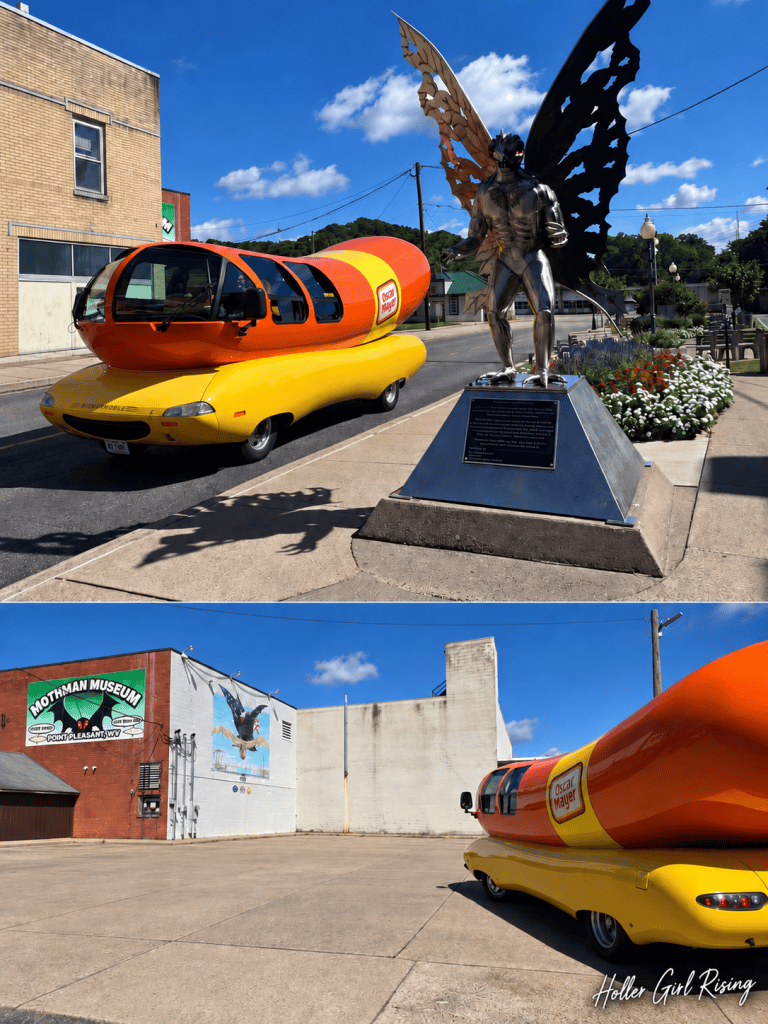
I grew up with the Mothman story in the air around me. In this part of Appalachia, it is more than something you hear around a campfire. It is stitched into the local landscape: the old TNT area, the river, the bridge, the museum, the statue downtown, and the stories people have carried for generations. You can grow up knowing the legend before you ever decide what you believe about it.
Now people come from all over to see the statue, visit the museum, take pictures, buy a Mothman shirt, and walk through a town that has become famous for a creature said to have appeared here nearly sixty years ago. I understand the pull. There is something thrilling about a mystery that belongs to a real place, and something lovely about seeing visitors curious about a small river town. The legend has become tourism, art, conversation, and a kind of hometown signature.
But when I look at Mothman, I also look at what is around him. The story is fun to tell. The harder stories are the ones we do not always put on a souvenir.
A legend beside a real tragedy
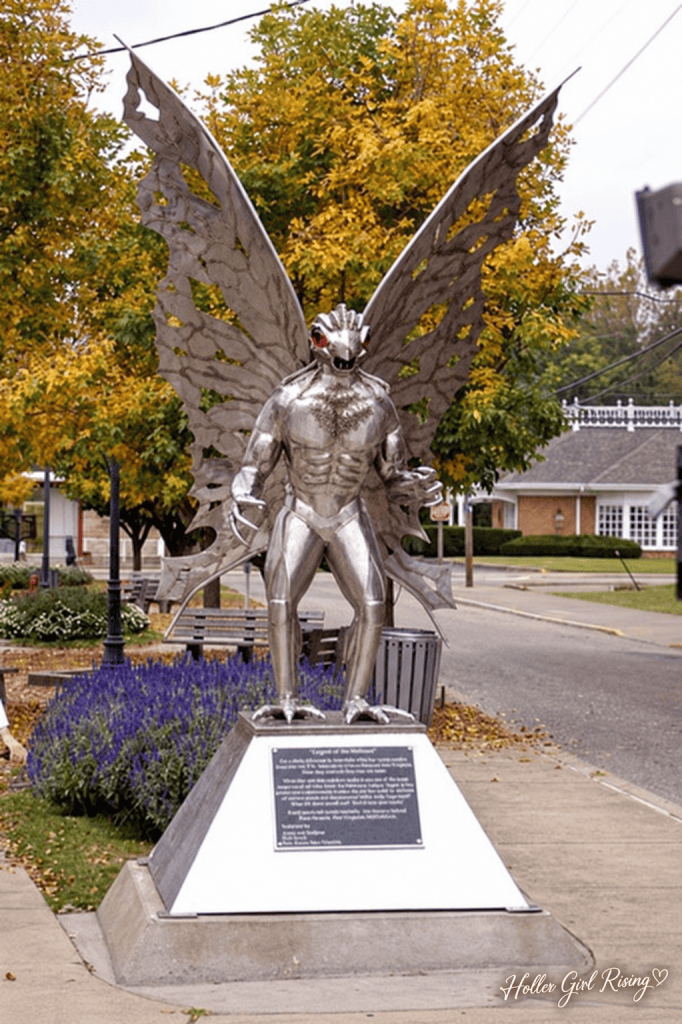
The first widely reported Point Pleasant sightings began in November 1966. Witnesses described a large, winged figure with glowing red eyes near the former World War II munitions site locals call the TNT area. The reports became part of American folklore, and the Mothman story grew with every retelling. (folklife.si.edu)
Then, on December 15, 1967, the Silver Bridge connecting Point Pleasant with Gallipolis collapsed into the Ohio River. Forty-six people died. That loss is not folklore. It is real grief, real families, and a real community changed forever. Investigators later identified a structural failure in an eyebar as the cause of the collapse. The bridge did not need a monster to explain what happened. (www-s.ntsb.gov)
Over time, the sightings and the collapse became linked in the popular story. Some people see Mothman as a warning. Some see a coincidence, a misidentified bird, or a story shaped by fear and memory. Some simply enjoy the mystery. I can respect all of that while being careful with the tragedy: the bridge collapse was an engineering disaster, and the people who died deserve to be remembered as people—not just as characters in a legend.
So, is Mothman real? I do not know that a winged creature with red eyes was really flying over Point Pleasant. There is no proof that settles that question. But Mothman is real in another way. He is real as a story people share, as a symbol visitors recognize, and as a piece of local identity. Legends can be meaningful without being evidence.
The town behind the postcard
Tourism matters. A festival, a museum, a restaurant, a shop, a hotel room, and a tank of gas can all bring money into a place that needs people to stop and stay awhile. Visitors can help keep downtown alive. They can remind us that our communities have history, beauty, humor, and imagination worth traveling for.
Still, a monster-themed weekend cannot solve the everyday problems of a region. Across the river in Meigs County, Ohio, recent Census survey estimates put the share of people living in poverty at roughly one in five. That number cannot describe every neighbor or every family, but it points to a reality that does not disappear when the festival banners come down. People are trying to make rent, find steady work, get health care, keep the lights on, and imagine a future close to home. (censusreporter.org)
And our local struggles are not a matter of people failing to try hard enough. Poverty, addiction, depression, and grief are not character flaws. They are shaped by many things: low wages, limited services, isolation, untreated trauma, housing insecurity, chronic illness, and the long shadow of economic change. When a community is spoken about only as a punchline or a place people leave, it becomes easier to overlook the people who are still here doing their best.
The long shadow of industry
We live in a region where industry has often arrived with big promises: jobs, growth, progress, a better life. Work has mattered enormously to families here. At the same time, industrial development can leave lasting questions about who receives the benefits, who carries the risks, and what happens when the jobs or companies move on.
People often use the name “Chemical Valley” for the Kanawha River corridor around Charleston, Nitro, and Belle, where chemical manufacturing became a major part of the region’s history. That name does not describe every town along the Ohio River, and Point Pleasant is not the same place as the Kanawha Valley. But the broader valley region shares a history of living beside heavy industry. EPA records and historical reports document chemical manufacturing, pollution concerns, and cleanup work at sites in the Kanawha Valley. That record is part of why people here pay close attention when someone proposes another large industrial project. (nepis.epa.gov, epa.gov, epa.gov)
Now data centers are being proposed in Mason County. These projects are presented as the next chapter of progress, but they raise practical questions: How much power and water will they use? What will the backup generators emit? How will roads, utilities, and emergency services be affected? What jobs will be created, and for whom? Who will monitor the impacts, and how will the public know what is happening?
Local reporting on a proposed Point Pleasant-area data center has described plans involving multiple buildings and a very large number of natural-gas and diesel generators. A related pipeline proposal has also drawn public attention. Those are plans and permit matters, not a reason to claim that every feared impact has already happened. Still, it is reasonable for residents to ask questions before a project is built, not only after the ground is broken. We have seen enough history to know that the word “progress” should come with details, public participation, and accountability. (wvpress.org, wvnews.com, wvpublic.org)
What are the real monsters?
Maybe the real monsters are not creatures at all. Maybe they are the forces that make people feel trapped: poverty that keeps narrowing choices, addiction that takes people we love, depression that convinces someone they are alone, pollution that can outlast the company that created it, and decisions made far away from the people who have to live with them.
I do not mean the people who are struggling. They are not monsters. The monster is the stigma that turns illness into shame. The monster is the belief that some places and some people are disposable. The monster is a promise of jobs without honest answers about the costs, or a story that attracts visitors while the community’s ordinary needs go unseen.
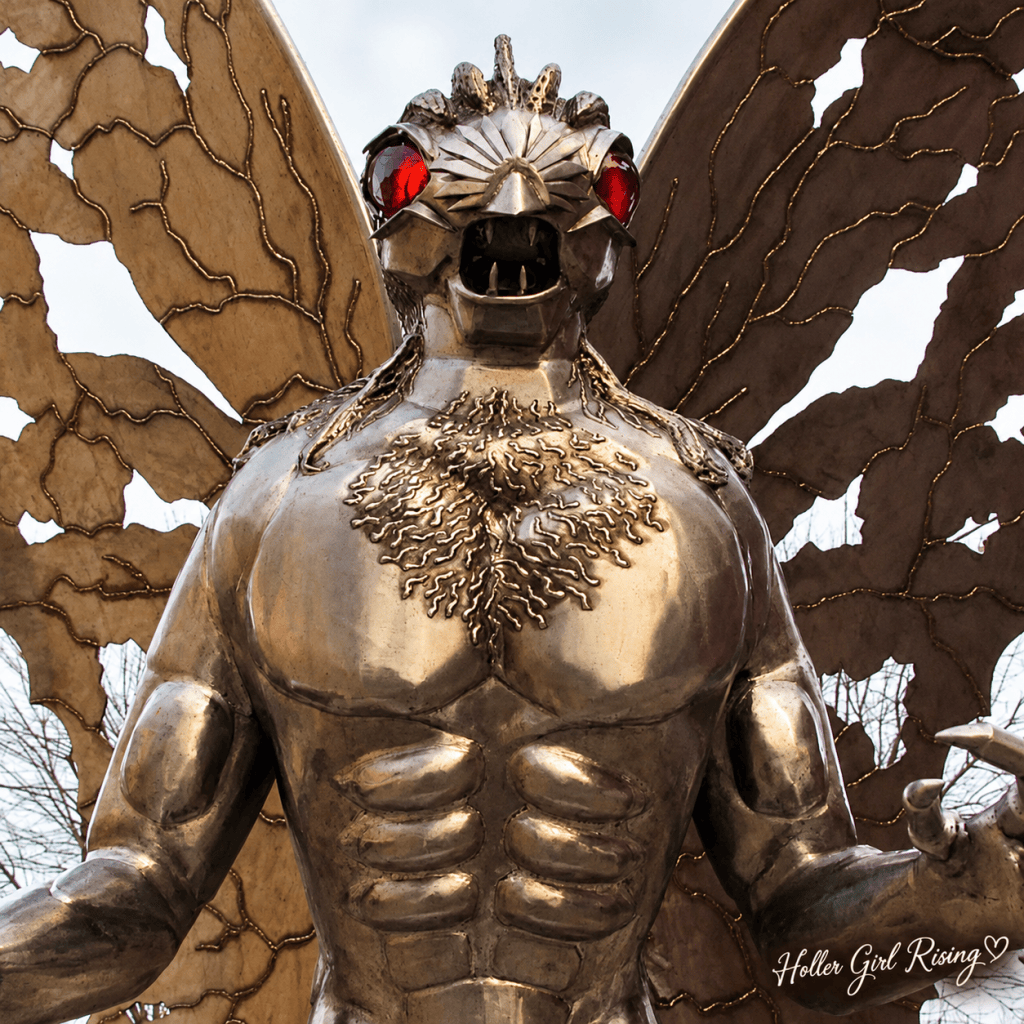
Mothman gives us a way to talk about fear. Maybe that is one reason the legend has lasted. A strange figure in the dark is easier to picture than all the slow, complicated things that wear a community down. You can point to a statue and say, “There he is.” It is harder to point to years of underinvestment, a shortage of care, a lost paycheck, a polluted stream, or a neighbor who is carrying more than anyone knows.
I still love the mystery of Mothman. I love the way the story belongs to this place, the way it draws people in, and the way it gives us something unusual to call our own. I can take a picture by the statue and still ask harder questions about what kind of future we are building around it.
Maybe Mothman is real. Maybe he is a bird, a shadow, a memory, or a story that grew wings. I cannot prove what those first witnesses saw. But I know the people of this region are real. Our grief is real. Our creativity is real. Our struggles are real. And so is our right to ask what is coming, who benefits, and what it will cost us.
The monster in the story may have glowing eyes. The monsters that matter most are the ones we allow to stay hidden in plain sight.


Leave a comment